At what age should a child start potty training?
Potty or toilet training is a gradual process of learning several new skills, rather than something they’ll ‘get’ in a few days. So, preparation can start well before the nappies come off completely (Bladder & Bowel UK, no date a; ERIC, 2026).
Every child develops at different rates. Most can start practising the skills needed to use a potty or toilet from when they can sit at around 6-9 months. In this way they can be fully toilet trained by the time they start school. Stopping using nappies by 30 months is best for bladder and bowel health, but it’s never too late to start (ERIC, 2026).
What is infant-led pottying?
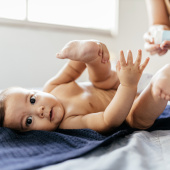
From birth, babies have some awareness of when they need to do a poo (defecate) or wee (urinate). They might show this by (Bladder & Bowel UK, no date a; Xu et al, 2021):
- Appearing to concentrate
- Moving in a certain way
- Pulling a face
- Crying
‘Baby-led’ or ‘infant-led’ pottying, or ‘Elimination Communication’ (EC), is when parents notice these cues and hold the baby over a potty or toilet. Doing this can mean that from an early age babies can recognise when they need a wee or poo, and the right place to do it. When following this method, some children and babies may be potty trained before their second birthday (Bladder & Bowel UK, no date a; Xu et al, 2021).
Some families might start later because they feel the child will learn more quickly when they are older, or because it is easier for the family. Families can support a child to develop the skills needed so it doesn’t become harder to introduce potty training when the child is older (Bladder & Bowel UK, no date a; ERIC, 2026).
Skills needed to potty train
Potty training involves the baby or child learning skills to (Bladder & Bowel UK, no date a):
- Recognise when they need to wee or poo
- Know the right place to wee and poo
- Tell their parent or caregiver that they need a wee or poo
- Wait until they get to the toilet
- Get themselves to the potty or toilet
- Get undressed to use it and dressed again afterwards
- Sit on the potty or toilet until they’ve finished
- Clean themselves afterwards, either by wiping or washing with water and drying themselves
- Wash and dry their hands
They do not need to be able to do all these things before preparing for potty training (Bladder & Bowel UK, no date a).
How do I prepare them for potty training?
Make sure they’re passing at least one soft poo every day (ERIC, 2026). If they’re not, see our article on constipation for tips.
The parent or caregiver can prepare the baby or child for potty training by (Bladder & Bowel UK, no date a; ERIC, 2026):
- Changing nappies as soon as wet or soiled so they recognise it is normal to be clean and dry.
- Letting them see other family members use the toilet.
- Showing them picture books or apps about using the potty or toilet.
- Sit their teddy or doll on the potty.
- Leaving the nappy off for short periods at home to get them used to not wearing it – it can help to do this just after they’ve done a wee or poo.
- Changing their nappy in the bathroom and tipping any poo from the nappy down the toilet so they can see.
- Putting a paper towel or dry cloth in their nappy so they can begin to recognise when they’re wet. Remove it as soon as wet to avoid nappy rash.
- Involving the child in getting themselves dressed, and selecting clothes that are easy for them to pull up and down.
- Helping them learn to wash and dry their hands.
Introduce the words or signs you will use so they can signal they need the toilet. Make sure everyone caring for them uses the same words or signs. For some families, cue cards may be helpful.
ERIC, The Children’s Bladder and Bowel Charity, has a helpful video on preparing for potty training.
What equipment do I need?
Here are a few items that might be helpful. You can often pick these up at NCT Nearly New Sales.
- A potty, if planning to use one
- Some families prefer a toilet training seat
- A step to access the toilet or the washbasin
- Pants or washable trainer pants
- A travel potty for out and about
- Whatever you plan to use to clean the bottom and hands
- Some parents want plastic sheeting or washable covers to protect car seats or chairs
- A mattress protector may be helpful for night training
How do I potty train at home?
Some parents might prefer to start potty training in the summer, so there aren’t so many layers of clothes to change. But potty training can happen at any time of year.
Avoid times of change at home, like moving house or starting nursery. Choose a period when the parent or caregiver can be at home with the child and attentive to their toileting needs for a few days (Bladder & Bowel UK, no date a; ERIC, 2026).
Here are some tips we’ve collected (Bladder & Bowel UK, no date a; ERIC, 2026):
- Use the words, signs or cue card you have decided on for asking if they need the toilet. Avoid asking too often, as this can increase anxiety.
- Once they can sit by themselves, start by gradually introducing the baby or child to the potty or toilet, perhaps while a parent is using the toilet so they can see it’s a normal part of life. Sit both boys and girls on it once a day. Reinforce the words or signs you are using.
- Over time build up how often and how long they’re on the potty or toilet, and reduce the clothes they’re wearing on their bottom half.
- Put the baby or child on the potty after they’ve woken up from sleep and when they’ve had food or a drink, or when you see them straining. This should start to catch the wees and poos.
- Using positive ‘well done’ language around wees and poos – it’s unhelpful to describe any normal bodily function as ‘dirty’ or ‘stinky.’
- When about half the wees and poos are being caught in the potty, it could be a good time to move to pants or washable trainer pants when they’re awake during the day. Pull up nappies are not recommended.
- Encourage them to push their own pants down and pull them up again. This helps them feel in control.
- Show, talk about, and get them involved in good personal hygiene: wiping or cleaning the bottom with water, handwashing and drying.
- Be encouraging and don’t tell them off for any wees or poos not on the potty or toilet.
- Some children may find the toilet flush loud and upsetting at first. Over time introduce them to operating the flush themselves.
Why are pull ups not recommended?
Once a baby or child starts wearing pants during the day, it can be confusing for them to wear nappies or pull ups when they’re awake. Pull ups and disposable nappy pants are so effective at keeping moisture away from the skin the baby or child may find it hard to tell if they’ve done a wee (Bladder & Bowel UK, no date a; ERIC, 2026).
They may also feel like a nappy to the baby or child, and they won’t understand why they’re not supposed to use them like a nappy (Bladder & Bowel UK, no date a).
Washable fabric trainer pants are more helpful for toilet training. They feel like real pants but absorb some moisture while still allowing the baby or child to feel wet. So, they can be a practical option if out and about (Bladder & Bowel UK, no date a).
Potty training with additional needs
Parents of children with additional needs or disabilities may find the process of potty training more challenging and it may take longer. But by following the same steps most babies and children will be able to potty train and there is no benefit in delaying (Bladder & Bowel UK, no date a; ERIC, 2026).
Some children will benefit from an occupational therapy assessment to see if any adaptative equipment will help them (Bladder & Bowel UK, no date a). Speak to the GP or health visitor, or the baby or child’s specialist doctor for more information.
Potty training away from home
Once in daytime pants it’s best not to switch back to nappies while out and about, so a travel potty can be helpful while learning or when there isn’t a public toilet within easy reach (Bladder & Bowel UK, no date a; ERIC, 2026).
Take a spare set of pants and clothes in case they’re needed.
Potty training at childcare
If the baby or child goes to nursery or childcare, let them know that you’re planning on potty training and will provide spare pants and clothes instead of nappies. Ask how they usually manage potty training, and check it meets your family’s needs (ERIC, 2026).
Ask the nursery, childminder or other caregivers to use the same language around potty training that is used at home. For example, what wees or poos are called, or how the child is asked if they need the potty (Bladder & Bowel UK, no date a).
Also ask them to put the child on the potty at the same times as at home, such as after waking up or food and drink. They can tell parents how toileting is going in the childcare setting (Bladder & Bowel UK, no date a; ERIC, 2026).
Potty training for naps and night
When the baby or child stays dry some of the time when they’re awake or wakes up from a nap with a dry nappy, they can start to nap with pants instead of a nappy (Bladder & Bowel UK, no date a; ERIC, 2026).
Help them to use the potty before they go to sleep and when they wake up. A waterproof mattress cover can protect the bed, but have clean bed sheets handy in case they’re needed (Bladder & Bowel UK, no date a; ERIC, 2026).
Often babies and children will become dry (not weeing in a nappy or pants) naturally at night a few months after successfully using the toilet or potty during the day (Bladder & Bowel UK, no date a). When this happens, they could start going to bed at night without a nappy.
They can be helped by (Bladder & Bowel UK, no date a; ERIC, 2026):
- Stopping food and drink an hour before bed (give plenty of water-based drinks earlier in the day).
- Having a consistent nap and bedtime routine, which includes using the potty or toilet before bed, and when they wake up.
- Not ‘lifting’ them onto the potty or toilet when they’re not fully awake, as this won’t help them learn to register that they need the toilet.
- Instead, help them go to the potty or toilet themselves if they wake.
What if they keep having accidents?
Ensure they’re getting enough fluids. Sometimes bladder or bowel problems are a result of dehydration (ERIC, 2026).
While learning or if unwell, it’s common for the baby or child to do wees and poos when they’re not on the potty or toilet. Clean them up calmly and take them to the toilet. Explain that’s where wees and poos go (Bladder & Bowel UK, no date a; ERIC, 2026).
Don’t put the baby or child onto the toilet too often to ‘prevent’ accidents. Their bladder might get used to only holding small amounts of wee, meaning they may need to empty it more often. It may also make them fed up with the process (Bladder & Bowel UK, no date a; ERIC, 2026).
You can use the Bladder & Bowel UK chart to record when your child’s nappy is wet or dry, so you learn their normal pattern.
When runny poo leaks around constipated poo it soils the pants. This is common while children are being potty trained and is called overflow soiling (NHS, 2023). Read our article to understand how to deal with constipation.
Bedwetting
Bedwetting is common in the first few years of life. After five years old, if a child frequently wets the bed despite regularly doing all their wees and poos in the potty during the day, it’s considered a medical condition called enuresis [EN-yuh-REE-sis]. Speak to their healthcare professional, who can provide support and treatment (Bladder & Bowel UK, no date a).
Benefits to starting earlier
Some research suggests that babies who start infant-led pottying cry less than those who are not. Supporting the bladder to mature earlier may mean fewer bladder problems later in childhood. The half squat position used to empty the bowel may prevent constipation (Bladder & Bowel UK, no date a).
Using fewer nappies will reduce household costs from either buying disposables or washing nappies and is better for the environment (Bladder & Bowel UK, no date a).
What if I feel it’s not working?
If the baby starts wearing pants but is finding it upsetting or it feels like they’re not ready, it can be stressful for everyone. Sometimes life gets disrupted for other reasons, and it’s no longer a good time for the family to do potty training. It’s ok to go back to the preparation stage for a while and try again in a few weeks (ERIC, 2026).
If the child is becoming distressed at the thought of using the potty to do a poo, they could use a nappy. Only use the nappy in the toilet area and encourage them to sit on the potty with the nappy on. Work towards removing the nappy completely (Bladder & Bowel UK, no date b). Bladder & Bowel UK has information on understanding toilet refusal.
Further information
ERIC has a useful hydration checker, to see if a child is drinking enough fluids.
The Institute of Health Visiting (IHV) has a downloadable sheet which can be printed and shared with anyone caring for a child.
Bladder & Bowel UK (no date a) Child information library. https://www.bbuk.org.uk/children-young-people/resources-for-children/ [15 May 26]
Bladder & Bowel UK (no date b) Understanding constipation in babies and toddlers. Available at: https://www.bbuk.org.uk/children-young-people/resources-for-children/ [27 May 26]
ERIC (2026) Potty training: how to start and best age to potty train. https://eric.org.uk/potty-training/ [15 May 26]
NHS (2023) Constipation in children. https://www.nhs.uk/baby/health/constipation-in-children/ [27 May 26]
Xu, P.C., Wang, Y.H., Meng, Q.J. et al. (2021) Delayed elimination communication on the prevalence of children's bladder and bowel dysfunction. Sci Rep 11, 12366. https://doi.org/10.1038/s41598-021-91704-3