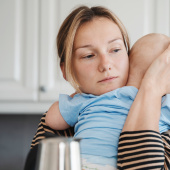
It’s common for babies and toddlers to have diarrhoea [DY-uh-ree-uh] and vomit occasionally. In most cases it’s an infection like gastroenteritis, also known as a stomach or tummy bug (NHS, 2023).
Most babies and toddlers who have diarrhoea and vomiting don’t need medical treatment and can be looked after at home. The treatment is the same if the baby has them separately or at the same time (NHS, 2023; NICE, 2009).
Contact the GP or call NHS 111 if the baby has diarrhoea and vomiting and (NHS, 2023; NICE, 2009):
- is under 12 months old and the parent or caregiver is worried
- has stopped feeding
- is feeding but keeps being sick and cannot keep fluid down
- seems to be getting more unwell
- has bloody diarrhoea or bleeding from the bottom
- is showing signs of dehydration and shock, such as fewer wet nappies, cold hands and feet
- has a temperature over 38 degrees in babies under three months, or over 39 degrees in babies over three months
How long will diarrhoea and vomiting usually last?
Diarrhoea usually lasts 5-7 days, and for most people stops within two weeks. Vomiting usually lasts 1-2 days, and for most people stops after three days (NHS, 2023; NICE, 2009).
Seek medical help if diarrhoea in an adult or child lasts more than 7 days, or vomiting for more than 2 days (NHS, 2023)
It can be stressful looking after a baby or child with diarrhoea. It may mean the parent or carer needs to negotiate time off work with their employer. See our article on Maternity and paternity leave, pay, rights and time off work.
How to treat diarrhoea and vomiting at home
If a baby has diarrhoea and vomiting it is important they have lots of fluids (NHS, 2023; NICE, 2009):
- Carry on breast or bottle feeding – it can help to give them small feeds more often than usual if they’re being sick.
- Babies under six months and on infant formula milk, or any babies over six months and on solid foods, can be given small sips of water between feeds.
- Babies under six months and breastfeeding should not need additional water as the breastmilk will adjust to meet their needs.
- Don’t give babies or toddlers fruit juice or fizzy drinks as they can make diarrhoea worse.
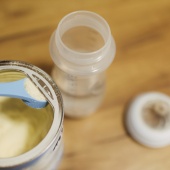
- Be sure to make the formula feed up following the instructions exactly and don’t water it down.
- Don’t give children under 12 medicine to stop diarrhoea.
- Don’t give aspirin to children under 16.
Preventing the spread of diarrhoea and vomiting
As diarrhoea and vomiting can spread to one person to another quickly, follow these steps to help reduce the chance of others getting ill (NICE, 2009; NHS, 2023):
- Wash hands with soap and water frequently, and dry carefully, especially after using the toilet, before eating or preparing food, and after changing dirty nappies or cleaning up vomit.
- Frequently clean surfaces which are touched by different people, for example toilet flushes and door handles.
- Use a separate hot wash for clothes and bedding which have been in contact with diarrhoea and vomit.
- Don’t share towels, cups, plates, knives, forks and spoons between members of the household.
- As much as possible, a person who is ill shouldn’t prepare food for other people.
- Babies and toddlers should be kept away from any childcare setting until 48 hours after the last episode of vomiting or diarrhoea.
- Anyone who has had diarrhoea and vomiting shouldn’t go in the swimming pool until 2 weeks after diarrhoea and vomiting has stopped.
What causes diarrhoea and vomiting in babies and toddlers?
Diarrhoea and vomiting are often caused by a stomach bug (gastroenteritis) or food poisoning (NHS, 2023).
This is different from the normal spitting up, or posseting, sometimes called reflux, and from Gastro-Oesophogal Reflux Disease (GORD).
There can be other causes in babies, which is why it’s important to seek medical help from NHS 111 or the GP if worried. Other reasons could include (NHS, 2023; NHS, 2024):
- Urinary tract infections (UTIs)
- Food intolerance or allergy
Dehydration risk factors
Babies and toddlers are at greater risk of dehydration if they (NICE, 2009):
- are younger than a year old, and especially younger than six months
- were a low weight at birth
- have had more than five episodes of diarrhoea in the last 24 hours
- have vomited more than twice in the last 24 hours
- haven't been feeding while unwell
Go to the Accident & Emergency Department if the baby or child (NHS, 2023; NHS, 2024):
- seems to be in a lot of pain
- might have swallowed something poisonous has yellow or green, bloody, or black vomit
- has unusually pale skin, lips or tongue
- is having difficulty breathing, or is taking short breaths
- is not responding as normal
See our article on When to urgently call the doctor about a baby.
NHS. (2023) Diarrhoea and vomiting. https://www.nhs.uk/symptoms/diarrhoea-and-vomiting/ [20 Jul 26]
NHS. (2024) Appendicitis. https://www.nhs.uk/conditions/Appendicitis/ [20 Jul 26]
NICE. (2009) Diarrhoea and vomiting caused by gastroenteritis in under 5s: diagnosis and management [CG84]. https://www.nice.org.uk/guidance/cg84 [20 Jul 26]