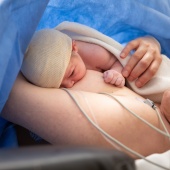
Challenges while breastfeeding can be upsetting and stressful. They may lead to the mother or breastfeeding parent questioning whether they want to continue breastfeeding.
Trained and non-judgemental supporters, such as our NCT Breastfeeding Counsellors and breastfeeding peer supporters can provide guidance on positioning and attachment which can help prevent, ease or resolve any problems. Stopping breastfeeding suddenly can make matters worse. So, they can also support with reducing or stopping breastfeeding (La Leche League GB, 2024).
Our NCT Breastfeeding Counsellors are on hand to answer questions about all types of feeding. Call our free-to-access Infant Feeding line on 0300 330 0700. The line is open every day of the year, including bank holidays, from 8am to midnight.
Oversupply/more milk than needed
Abscess
An abscess is a painful build-up of pus inside the breast, which will need treatment in hospital to drain it (NHS, 2023 a).
Mastitis can lead to an abscess if left untreated. Between 3 and 11 in 100 women or birthing people with severe mastitis may develop an abscess (Mitchell et al, 2022). This means 89 to 97 in 100 will not.
Symptoms of an abscess in the breast include (NHS, 2023 a):
- A lump or swelling which feels warm.
- A darker patch of skin. On pale skin this may appear red.
- Pain
- Fever
- Feeling unwell
See a GP urgently or call 111 if the breast is painful, warm or red or darker than usual, or if there is a lump or swelling in the breast. Antibiotics may be given first, and a hospital appointment arranged for the breast abscess to be drained of pus (NHS, 2023 a).
After the abscess is drained, it should heal completely within a few days or weeks. Breastfeeding can continue from both breasts during treatment, and may help the breast to heal (NHS, 2023 a).
Blisters/blebs
Milk blisters or blebs are tiny white or yellow bubbles on the tip of the nipple. They may cause stinging, or no pain at all (La Leche League GB, 2024).
They can be left alone if they aren’t causing pain or blocking milk coming out. Removing them is not recommended as it can damage the breast tissue (Mitchell et al, 2022). They will go away on their own (La Leche League GB, 2024).
If painful, talk to a pharmacist who can provide capsules to swallow and an ointment to use on the affected nipple. It is safe to continue breastfeeding if the ointment is wiped away from the nipple with a clean cloth before feeding (Mitchell et al, 2022).
Blocked ducts/plugged ducts
When milk is not frequently and effectively removed from the breast, it can cause swelling and narrowing of the tubes that carry milk to the nipple (milk ducts). This causes pain and could lead to mastitis if not treated. A small, tender lump might be felt (Mitchell et al, 2022; NHS, 2022 a).
If a blocked duct is suspected it is important to avoid (Mitchell et al, 2022; NHS, 2022 a):
- Squeezing or massaging – which could damage breast tissue
- Increasing feeds or expressing – which could increase breastmilk supply and lead to further inflammation
- Wearing tight bras or clothing – which can restrict milk flowing freely from all parts of the breast
It can be helpful to (NHS, 2022 a):
- Continue feeding/expressing as normal
- Try a new breastfeeding position to see if it helps
- Apply a cloth soaked in warm (not hot) water on the breast to encourage milk flow
- Apply a cloth soaked in cold water between feeds to ease the pain
- Take paracetamol or ibuprofen to relieve the pain – both are safe when breastfeeding
Engorgement
Breast engorgement is when the breast becomes uncomfortably full of milk. This feels hard, tight and painful (NHS, 2022 a).
It is common in the very early days of breastfeeding. After the milk volume increases, the breasts can take time to adjust to the baby's needs (NHS, 2022 a).
It may also happen if (NHS, 2022 a; La Leche League GB, 2024):
- The mother or breastfeeding parent is away from the baby for a period and doesn’t express any milk
- The baby starts sleeping for longer at night
- The baby is ill and not wanting to feed as much
- The baby is older and starts solid food, therefore breastfeeding less
As well as being uncomfortable for the mother or breastfeeding parent, it can make it hard for the baby to feed if the breasts are engorged. Engorgement can be relieved by expressing a little milk by hand until the pressure is reduced. Avoid expressing too much, as this will make the breasts produce more milk (NHS, 2022 a).
You could also ask a Breastfeeding Counsellor about reverse pressure softening, which may help. This means pressing gently around the nipple with the fingers before feeding (La Leche League, 2024).
Inverted nipples
Nipples come in all sorts of shapes and sizes. While most stick out, some are flat or inverted (La Leche League GB, 2016).
If nipples remain flat even when stimulated, they may be inverted. If one or both nipples are flat or inverted, it may take a little longer to establish breastfeeding (La Leche League GB, 2016). An NCT Breastfeeding Counsellor may be able to help.
This video from Lucy Webber shows how to get an exaggerated latch or ‘flipple’ which may encourage feeding.
Latch issues
A baby might struggle to attach or stay attached at the breast. This can lead to:
- Breast engorgement
- Nipple soreness or damage
It can also affect:
- Weight gain
- Feed frequency
See our article on breastfeeding cues, attachment and positions for signs the baby is latching well.
Mastitis
Mastitis means ‘breast inflammation’. It covers a wide range of problems, from a blocked duct to a severe breast infection (La Leche League GB, 2024).
Although the milk is still safe to drink, babies might refuse to feed from a breast that has mastitis. If the baby is refusing to feed, milk will need to be expressed from the breast at the time the baby would normally feed (La Leche League GB, 2024). This milk can either be given to the baby or stored for future use.
Signs of mastitis include (La Leche League GB, 2024; NHS, 2022 a):
- The breast feeling warm, hard and/or lumpy
- One or more areas of breast tenderness which feel painful to touch
- A fever or flu-like symptoms
- An area of skin that looks red or darker than usual
What might cause mastitis?
Mastitis may be caused by (La Leche League GB, 2024):
- Milk not being removed effectively. This is due to issues with positioning and attachment
- Limiting feeds, or feeding to a schedule, which may mean that breasts aren’t relieved as often as they need to be
- Producing more milk than needed (oversupply)
- Less milk being removed than usual, for example because the baby is ill, or introducing solid food
- Breast injury, which could be something as simple as a tight bra or seatbelt
- Infection, possibly through an open wound in the nipple
Things that may make mastitis more likely include (La Leche League GB, 2024):
- Extreme tiredness and stress
- Being anaemic or having a weakened immune system
Treatment for mastitis
If started straight away it can be possible to treat mastitis at home without medical help. These tips may help (La Leche League GB, 2024; Mitchell et al, 2022):
- Continue to remove milk as normal by feeding the baby or expressing milk, but only to keep it feeling comfortable. If the baby doesn’t want to feed from the affected breast, then feed from the other. Express from the affected breast until the baby returns to it
- Take over-the-counter medication such as Ibuprofen, which can reduce inflammation. Paracetamol is also good for pain but doesn’t reduce inflammation
- Cool compresses on the affected area between feeds can help
- Rest
- Ask a Breastfeeding Counsellor about lymphatic drainage
- Avoid any rough treatment of the breasts, which can damage the tissue
- Mastitis is not contagious
If after 24 hours the symptoms are improving, then continue. If they are the same or getting worse, then antibiotics may be needed from a GP or NHS 111 (La Leche League, 2024).
Let the doctor know if breastfeeding so they prescribe an appropriate antibiotic. Continue the self-help treatments while taking antibiotics (La Leche League GB, 2024).
The course of antibiotics should be 10-14 days, but if there is no improvement after three days or symptoms get worse, return to the GP (La Leche League GB, 2024).
For more support with mastitis call our NCT Breastfeeding Counsellors.
Not enough milk
It’s common to worry that a baby isn’t getting enough milk. See our article on ‘Is my baby feeding well?’ for signs that a baby is getting the right amount of milk, and what to do if not.
Oversupply/more milk than needed
Some people experience an oversupply of milk. They may find this uncomfortable, or the baby may find the amount of milk produced distressing. They may get upset or splutter when milk comes out (La Leche League GB, 2024).
Suggestions to manage oversupply include (Trimeloni and Spencer, 2016):
- Laid-back feeding, to slow the flow of milk
- Block feeding from one breast for one breastfeeding session or a period of a few hours. This reduces demand on the other breast and so decreases supply.
- Some people decide to collect extra milk and donate it to their local milk bank for babies in neonatal care. Ask a midwife or health visitor about this.
Sore or cracked nipples
Experiencing sore or cracked nipples when breastfeeding can be painful and upsetting, and it’s important to get support as soon as possible (NHS, 2022 b).
If nipples are sore or cracked, it can be a sign that the baby isn’t attaching as well as they could be. A midwife, health visitor or Breastfeeding Counsellor can observe a feed and support with the baby’s positioning and attachment (NHS, 2022 b). Not all midwives or health visitors have additional training in breastfeeding support, so feel free to ask if they do. You can expect them to observe a full feed to get a true picture of how breastfeeding is going.
The pain is caused by the nipple resting at the front of the baby’s mouth, where it is pinched by the hard palate, rather than comfortably at the back of their mouth where the palate is soft (NHS, 2022 b).
Continue to breastfeed or express milk. Nipple shields or breast shells aren’t recommended and won’t help with the baby’s attachment (NHS, 2022 b).
Breastmilk and air are the best thing to help nipples heal (NHS, 2022 b).
Thrush/candida
Recent research suggests that Thrush (also called candida) is over-diagnosed in breastfeeding parents, when the cause of breast or nipple pain is more likely to be ineffective breastfeeding positioning or attachment. This leads to overprescribing of antifungal treatment, which hides the true cause of the problem (Breastfeeding Network, 2024).
So, it’s important to explore other potential causes of pain first. Thrush can only be diagnosed by a health professional who will take a swab and test for the infection (NHS, 2023 b).
If the baby has thrush in their mouth, it may mean they don’t feed as effectively, or don’t want to feed. This can cause pain for the mother or breastfeeding parent (NHS, 2023 b; Breastfeeding Network, 2025).
In a baby, thrush appears as white spots on their tongue, gums, cheeks or roof of the mouth, which can’t be wiped off. They might also be unsettled while feeding (NHS, 2023 b). The NHS has some useful images.
Thrush is not contagious, so the breastfeeding parent does not need to be treated if the baby has it (Breastfeeding Network, 2025).
It may follow a course of antibiotics taken by the baby. Antibiotics can reduce the number of ‘good’ bacteria, meaning the candida fungus can flourish (NHS, 2022 c).
If thrush is confirmed, anything that goes in the baby’s mouth will need to be washed and sterilised, and bras and breast pads will need to be washed at high temperature (NHS, 2022 c).
Use any expressed milk while having treatment, but do not store it for later as it could lead to the thrush returning (NHS, 2022 c).
Thrush is treated with an antifungal gel or liquid for the baby. The Breastfeeding Network has guidance on how to safely use the gel. Symptoms should improve within a few days (NHS, 2022 c).
Tongue tie
Sometimes the baby’s tongue is attached closely to the floor of the mouth by the strip of tissue under the tongue (the frenulum). This can make breastfeeding uncomfortable or less effective. See our article on tongue tie.
Vasospasm
Vasospasm is when the blood supply to the tip of the nipple stops for a short while. It can happen in one or both breasts (Breastfeeding Network, 2025).
Signs of Vasospasm include (Breastfeeding Network, 2025):
- Pain in the nipple or breast tissue
- Pain is worst at the end of a feed, or for up to 30 minutes after a feed
- The nipple colour is lighter at the tip
- The nipple changes colour after a feed from a lighter or paler colour to red (may be harder to see on darker skin tones)
This may be caused by:
- The baby squashing the nipple between the tongue and the roof of the mouth
- Raynaud’s Phenomenon, when blood stops flowing to the tips of the fingers, toes, and nipples
Seek help from a midwife, health visitor or Breastfeeding Counsellor to check positioning. If problems continue, seek further support and ask about Raynaud’s Phenomenon (Breastfeeding Network, 2025).
Prevention of breastfeeding challenges
- Feeding the baby when they show hunger cues or breasts feel very full, as well as not limiting feeds or feeding to a schedule, can prevent breasts becoming engorged or overly full (La Leche League GB, 2024). If the baby does not want to feed, read our tips to encourage them.
- Feeding many times a day means that any discomfort quickly becomes very stressful. Get support early on from a midwife, health visitor, breastfeeding peer supporter or Breastfeeding Counsellor. Adjusting the positioning and attachment could be enough on its own to improve the problem.
- Experimenting with different breastfeeding positions can help find a more comfortable one (La Leche League GB, 2024).
- Wearing a well-fitting and supportive bra which allows the milk to flow freely through the breast (NHS, 2022 a). Tight clothes, bags and seatbelts can affect the breast and restrict the flow of milk (La Leche League, 2024).
- Resting as much as possible may help prevent or reduce inflammation. If you have support available, accept offers of food or help with the baby (La Leche League GB, 2024).
- Hand expressing a little milk can relieve engorged breasts. Express just enough to ease discomfort, as expressing larger amounts can increase supply and lead to ongoing engorgement (La Leche League GB, 2024; Mitchell et al, 2022).
- Avoid using nipple shields. They haven’t been found to be effective and can mean the baby doesn’t feed efficiently (Mitchell et al, 2022).
- Avoid cleaning the nipples as this can damage the skin (Mitchell et al, 2022).
Our NCT Infant Feeding Line is open every day of the week, 365 days a year, from 8am to midnight. Call 0300 330 0700 if you have any questions, concerns or need support.
Breastfeeding Network (2024) An update on our information on, and approach to, persistent breast and nipple pain when breastfeeding.
https://www.breastfeedingnetwork.org.uk/an-update-on-our-information-on… [24 Mar 26]
Breastfeeding Network (2025) Pain: If breastfeeding hurts. https://www.breastfeedingnetwork.org.uk/breastfeeding-information/probl… [15 Jan 26]
La Leche League GB (2016) Inverted nipples. https://laleche.org.uk/inverted-nipples/ [15 Jan 26]
La Leche League GB. (2024) Mastitis, blocked ducts, and engorgement. https://www.laleche.org.uk/mastitis/ [14 Jan 26]
Mitchell, K. B. et al (2022) Academy of Breastfeeding Medicine Clinical Protocol #36: The Mastitis Spectrum, Revised 2022. Breastfeeding medicine, 17(5) pp. 360-376. https://www.bfmed.org/protocols [14 Jan 26]
NHS (2022 a) Breast pain and breastfeeding. https://www.nhs.uk/baby/breastfeeding-and-bottle-feeding/breastfeeding-… [15 Jan 26]
NHS (2022 b) Sore or cracked nipples when breastfeeding. https://www.nhs.uk/baby/breastfeeding-and-bottle-feeding/breastfeeding-… [15 Jan 26]
NHS (2022 c) Breastfeeding and thrush. https://www.nhs.uk/baby/breastfeeding-and-bottle-feeding/breastfeeding-… [15 Jan 26]