Take the survey
This is a new article and we'd love to know if you found it useful.
Let us know what you thought by answering our short survey.
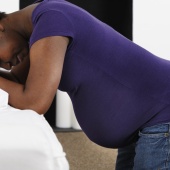
Women and birthing people have always laboured and given birth while moving around in whatever position felt comfortable. When birth moved largely into hospital it became more normal to labour while lying in bed, however this might not always be the most helpful position.
What are the benefits of moving in labour?
It’s common for women and birthing people to feel the need to wiggle or move the pelvis around during labour to relieve discomfort. Being prevented from moving can mean labour feels more painful. Lying on the back or reclining on the sacrum (the bone at the back of the pelvis) makes it harder for the sacrum to move and create more space to allow the baby through.
What is the best position for labour?
There is no evidence of an ‘optimum’ position – the woman or birthing person can use any position that feels stable and comfortable (Topalidou et al, 2025).
Reviews of evidence suggest that it’s important not to have fixed ideas about positions to use during labour. Midwives and birth partners can support the woman or birthing person to choose a position that feels relaxed and comfortable, and then to move between positions as needed (Healy et al, 2020; NICE, 2023; O’Brien, 2022).
During an NCT Antenatal course we help parents explore positions and movement that might feel more comfortable for them. This includes when the woman or birthing person and baby are being monitored or using pain management during labour.
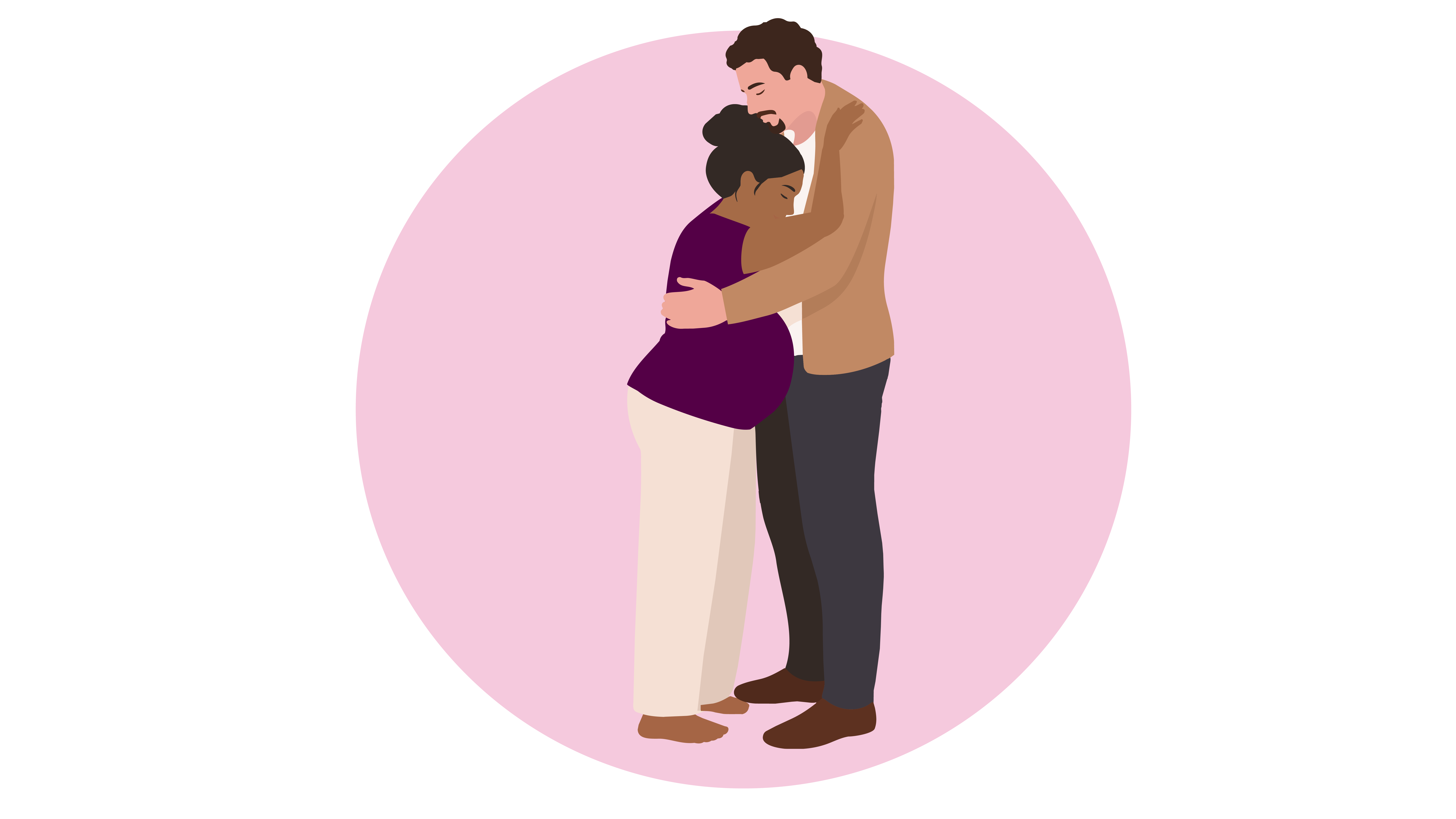
Image shows woman or birthing person leaning on partner while standing.
What about movement with a physical disability?
Having a physical disability or condition that limits movement does not automatically mean the baby is born by caesarean. While it may be more challenging to find a suitable position, the guidance remains to move between positions to be more comfortable and reduce the chance of pressure ulcers (Madorsky, 1995).
During pregnancy, people with limited mobility can discuss options for support with their midwife. They may wish to visit the birth room to check what resources are available. This might be a more spacious room, a hoist, or a birth pool. They can ask for any preferences to be noted on their hospital record.
What are the benefits of upright and mobile positions?
The woman or birthing person should be supported to choose a position that feels safe and comfortable for them and supported to move freely (Gimovsky & Berghella, 2022; Kibuka et al, 2021; The Epidural and Position Trial Collaborative Group, 2017; Topalidou et al, 2025; Walker et al, 2018; Zang et al, 2021).
Research using a magnetic resonance imaging (MRI) scanner to see what is happening in the pelvis shows that upright positions allow flexibility in the pelvis, creating more space. This means the baby can move through the pelvis more easily (Healy et al, 2020).
Women and birthing people who spend more time in upright and mobile positions in the 24 hours before birth including during labour may be less likely to use an epidural (Kjeldsen et al, 2025; Lawrence et al, 2013).
While evidence is mixed, most studies conclude that when there is no epidural, upright and mobile positions are associated with (Familiari et al, 2023; Gimovsky & Berghella, 2022; Gupta et al, 2017; Healy et al, 2020; Kibuka et al, 2021; Lawrence et al, 2013; Zang et al, 2020; Zang et al, 2021):
- Reduced pain
- Lower use of assisted birth with forceps or ventouse or caesarean birth
- Lower chance of tearing or episiotomy.
If the woman or birthing person has an epidural, moving between side-lying positions may reduce assisted and caesarean birth (Walker et al, 2018). Upright and mobile positions are associated with less perineal trauma, a greater sense of control, and a more positive birth experience (Gupta et al, 2017; Kjeldsen et al, 2025).
While it is the most common position used, lying on the back during the first stage of labour is not recommended. The use of stirrups is not recommended outside situations such as assisted birth (Familiari et al, 2023; Gimovsky & Berghella, 2022; Hofmeyr & Singata-Madliki, 2020).
Are upright and mobile positions safe?
There can be a slightly increased risk of falls in pregnancy when the pregnant person overestimates their ability to balance (Topalidou et al, 2025). A health professional or support person should always be present during labour, and to reduce the chances of falling:
- Handrails or similar support can help.
- Exercise during pregnancy helps strengthen the body and improve balance.
- Use of water in a birthing pool eases movement and reduces issues with balance.
Positions to explore during pregnancy
These positions are options to try as a starting point during labour.
- It is best not to fix on a single position early in labour and stay there. It can be more helpful to occasionally change position between contractions.
- It is important to always have a support person around to provide stability and safety in moving between positions.
- Some positions are easier when using an exercise ball or peanut shaped ball. Some people buy or borrow these, and others use whatever is provided in the birth centre or hospital. Pillows and chairs can produce the same results.
Standing positions and movement
In early labour it is common to remain standing during shorter contractions and continue with usual activities between them. Going for a walk is often recommended, and pausing to lean against a wall, tree, or birth partner during a contraction.
At home, surfaces can be explored to lean on, such as a kitchen worktop, or the back of a sofa.
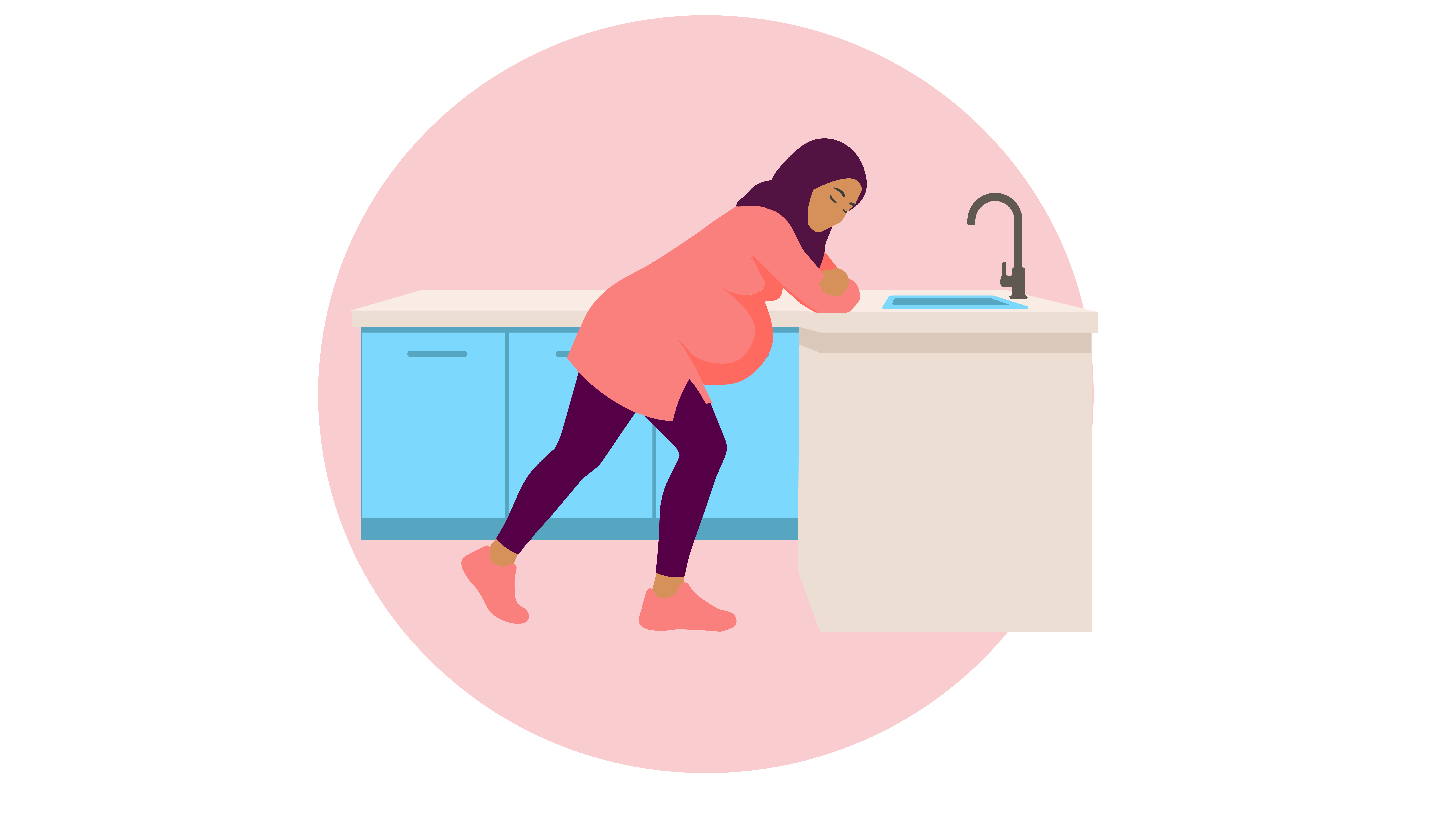
Image shows woman or birthing person leaning on kitchen counter
Some people like to hang and swing their hips, using a stable anchor like the post at the bottom of the stairs. Having one foot on a stair might also feel comfortable.
Sitting or squatting positions and movement
As labour progresses, there may be a desire to move into a sitting position.
Using a birth or exercise ball means it’s possible to rock or sway. Birth balls come in different sizes. Choose one where the hips are higher than the knees when sitting on it.
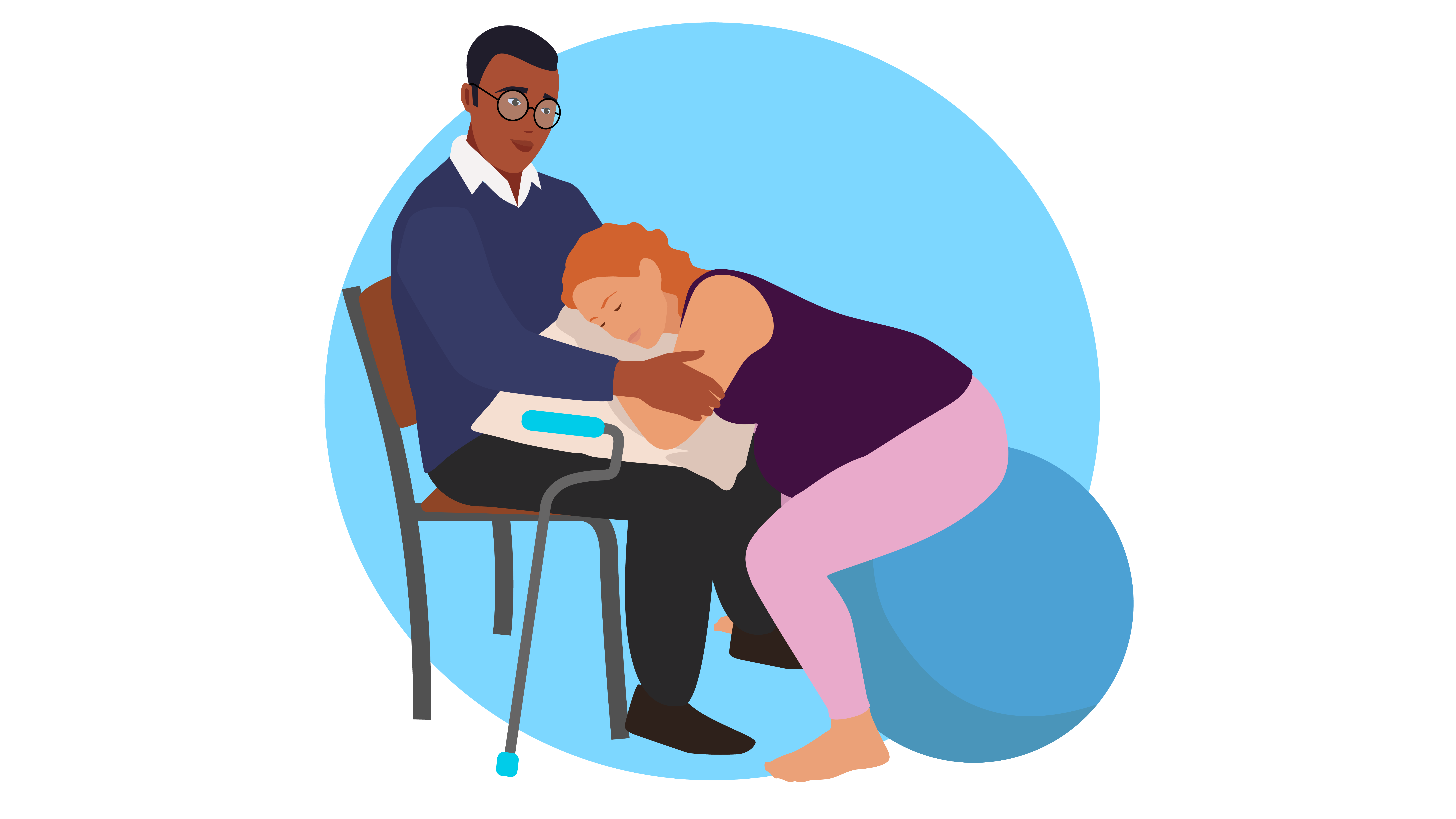
Image shows woman or birthing person sitting on birth ball and leaning on seated partner
Some people find squatting comfortable. Practising in pregnancy can help to build the strength needed for labour (Savla et al, 2024). Partners can support squatting by providing stability or counterbalance where needed. Some hospital beds have a support bar for a squatting position.
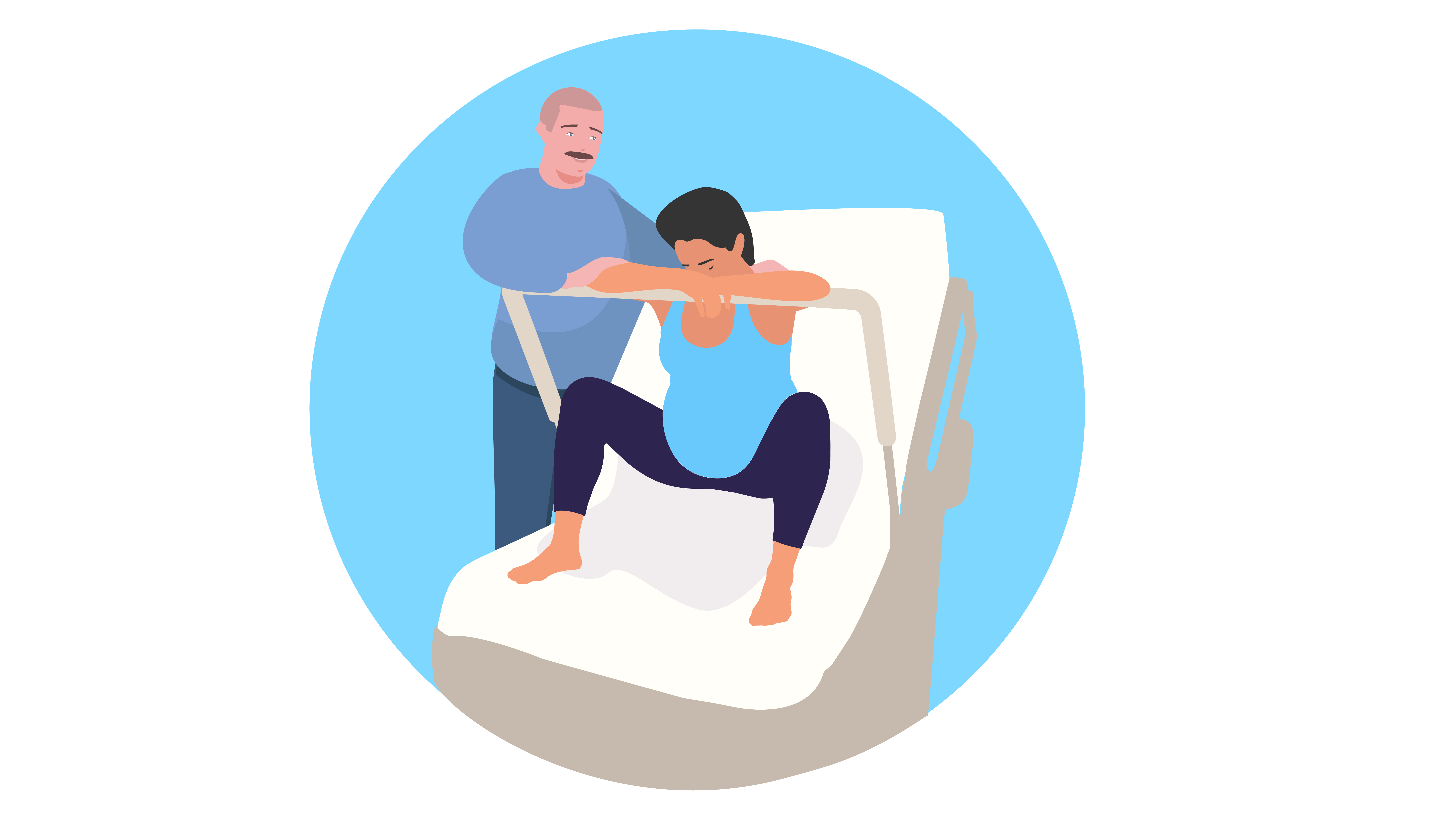
Image shows woman or birthing person in a seated squat on a hospital bed, supported by a bar on the bed and their partner
The birth centre or hospital may have a birth stool, which can be very comfortable in labour and birth. Where they are not available, a toilet seat could be used. Placing a towel under the toilet seat removes any anxiety about the baby being born into the toilet. Where there is a low cistern the labouring woman or person sometimes finds it helpful to sit backwards on the toilet and rest on the cistern.
Kneeling positions and movement
As labour progresses, it can be reassuring to get closer to the ground by kneeling.
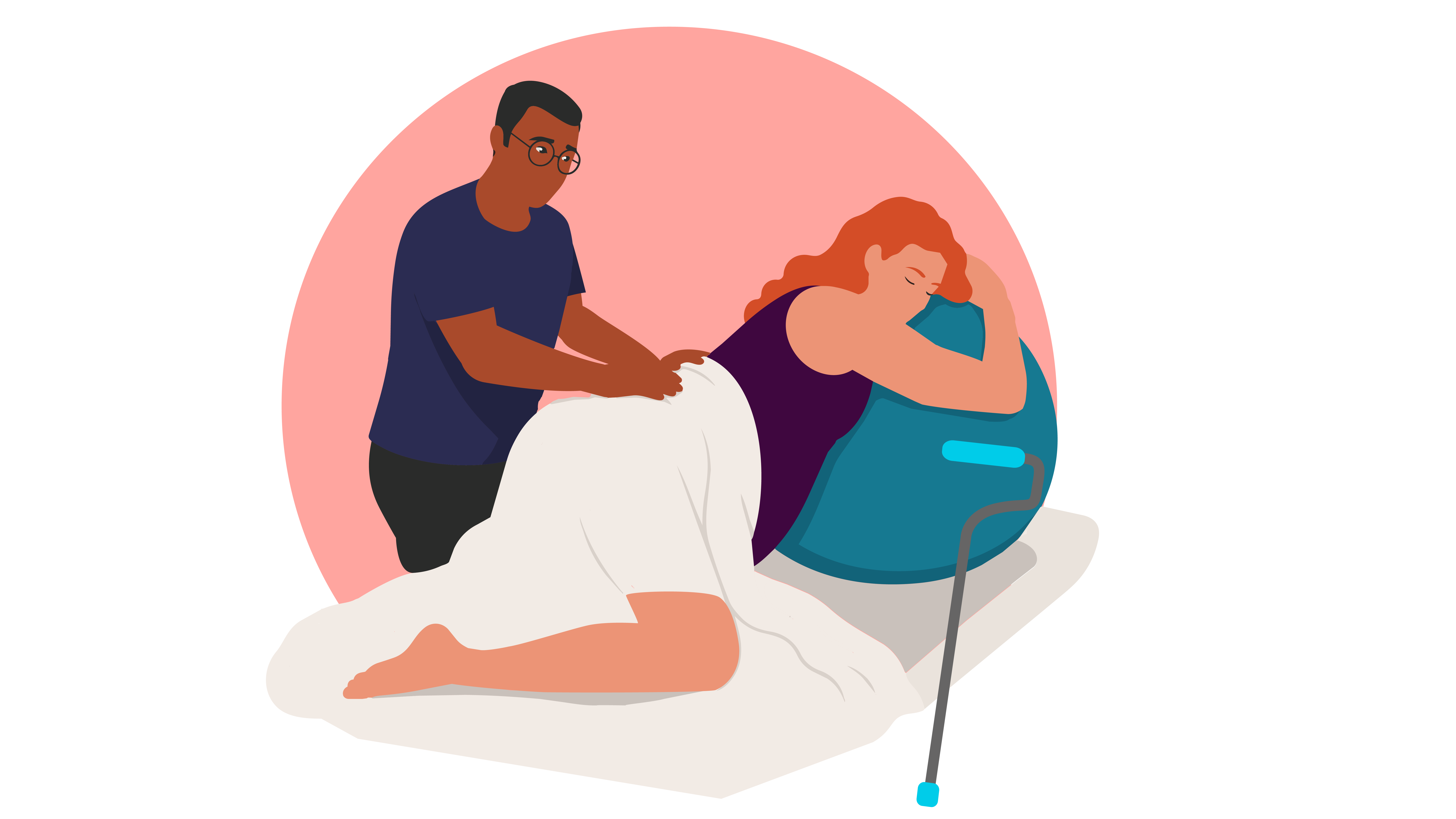
Image shows woman or birthing person kneeling and leaning on a birth ball while a partner massages her back
Using an exercise ball means the pregnant woman or person can rock and sway. Padding will be needed under the knees.
Some people find that an asymmetric position, kneeling on one side with the other foot on the ground, is comfortable and still allows for rocking and movement. This tilts the pelvis which may help the baby move through if they’re in an awkward position.
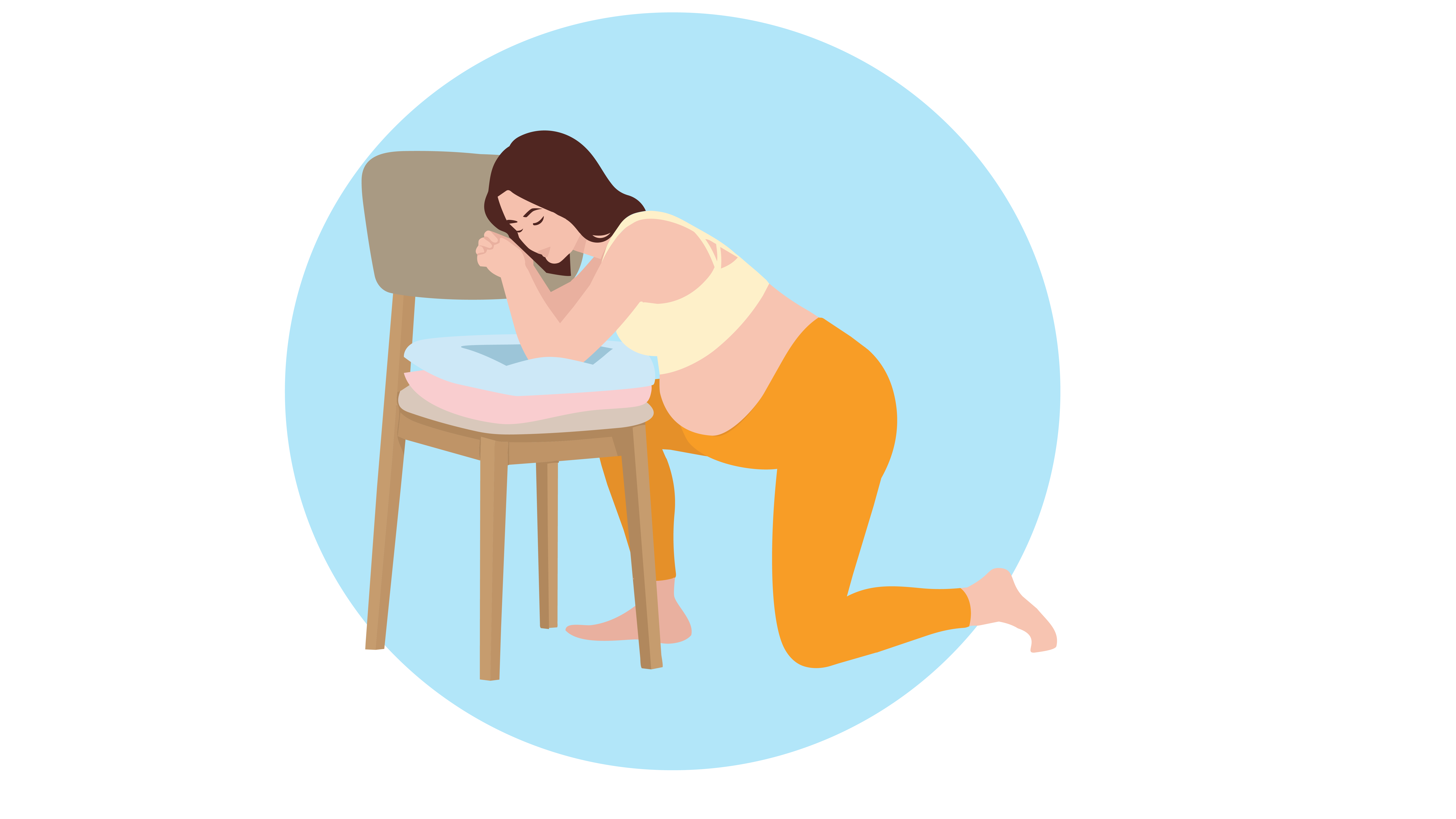
Image shows woman or birthing person leaning on a chair while kneeling in an asymmetric position
Lying on the side
It’s common to get tired during labour, and side lying positions mean the pelvis can still open while the woman or birthing person rests.
Lying on one side with the upper leg resting on padding or a ball opens the hips. The ball can be partially deflated if necessary. Alternatively, letting the upper leg dangle over the edge of the sofa or bed is comfortable for some.
Alternating side-lying positions on different sides every few contractions can be supported when the woman or birthing person has an epidural. This is known to reduce the chance of further interventions such as assisted or caesarean birth (Walker et al, 2018).
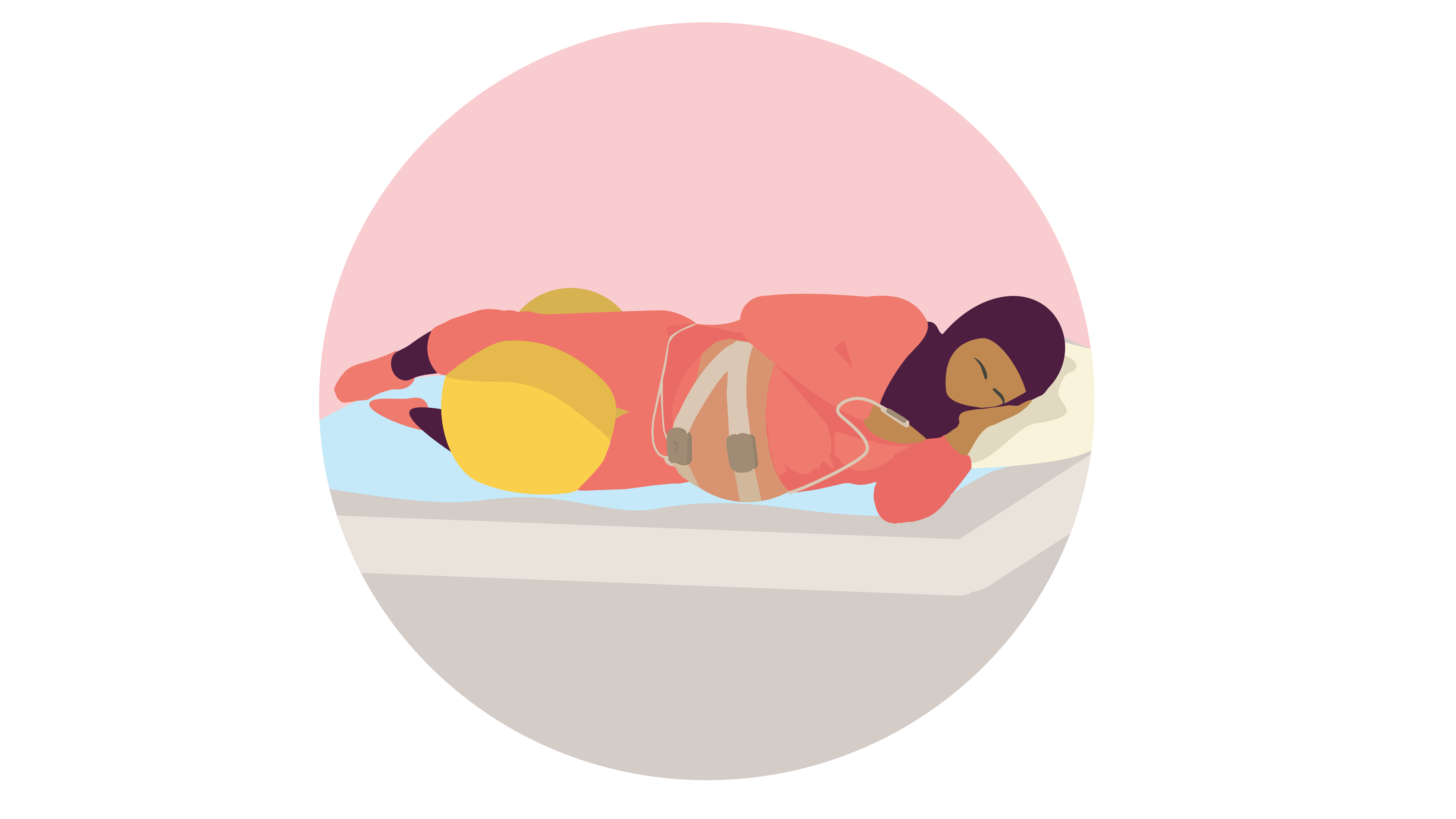
Image shows woman or birthing person lying on her side with a peanut ball between her knees
Options in water
Some people find the bath or shower very comfortable during pregnancy and decide this is where they would like to labour. This might be the warmth, sensation, or the buoyancy which relieves the weight of pregnancy, making it easier to move around. All the positions above can be explored in water. Read more in our article on labour and birth in water.
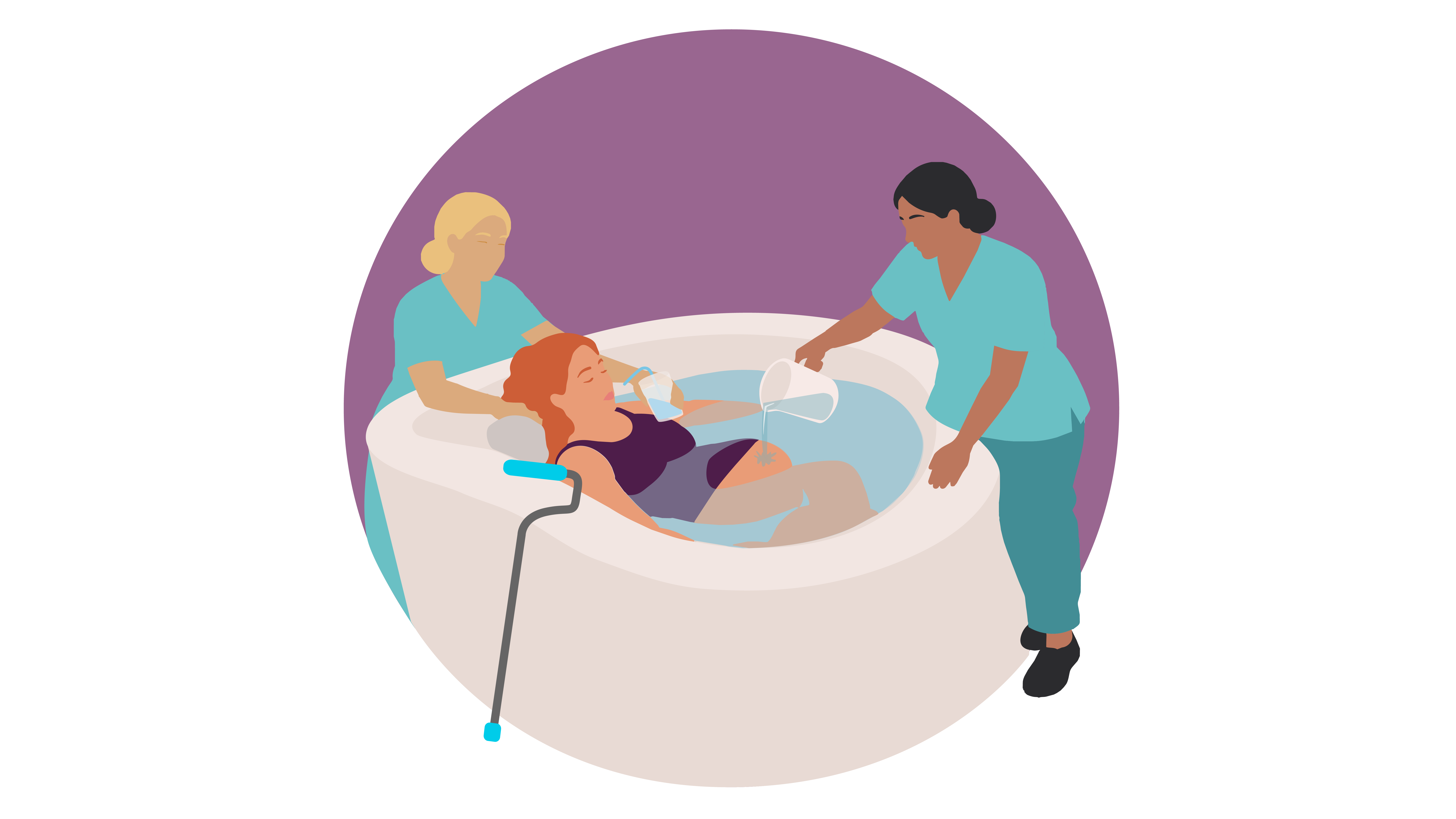
Image shows woman or birthing person in a birth pool while a supporter pours water over their belly
Moving between positions
Some birth units actively encourage movement between positions by suggesting dancing or using a birth ball or other labour prop. Dancing has been found to reduce the pain of labour and improve feelings of satisfaction (Binici & Aktaş, 2024).
What else can the birth partner or doula do to support?
A doula or birth partner can help with moving from one position to another and make sure supportive padding is used where needed.
They can check from time to time that the woman or birthing person is still comfortable, and hand over water to drink or the gas and air mouthpiece when requested.
In most positions the partner can massage the head, back, arms, or legs, which some women and birthing people find soothing.
If the woman or birthing person and baby are being continuously monitored, they are sometimes told to remain still to avoid breaks in the recording. This can feel very uncomfortable and restrictive.
The birth partner can hold the monitor in place if necessary, and advocate for the labouring person to be able to use comfortable positions and movement.
A doula may offer the use of a Rebozo [re-bo-zo] for comfort. The Rebozo is a traditional woven cloth, and both the cloth and technique for pregnancy and labour originated in Mexico. To feel confident in using a Rebozo you can ask about the training the doula has received.
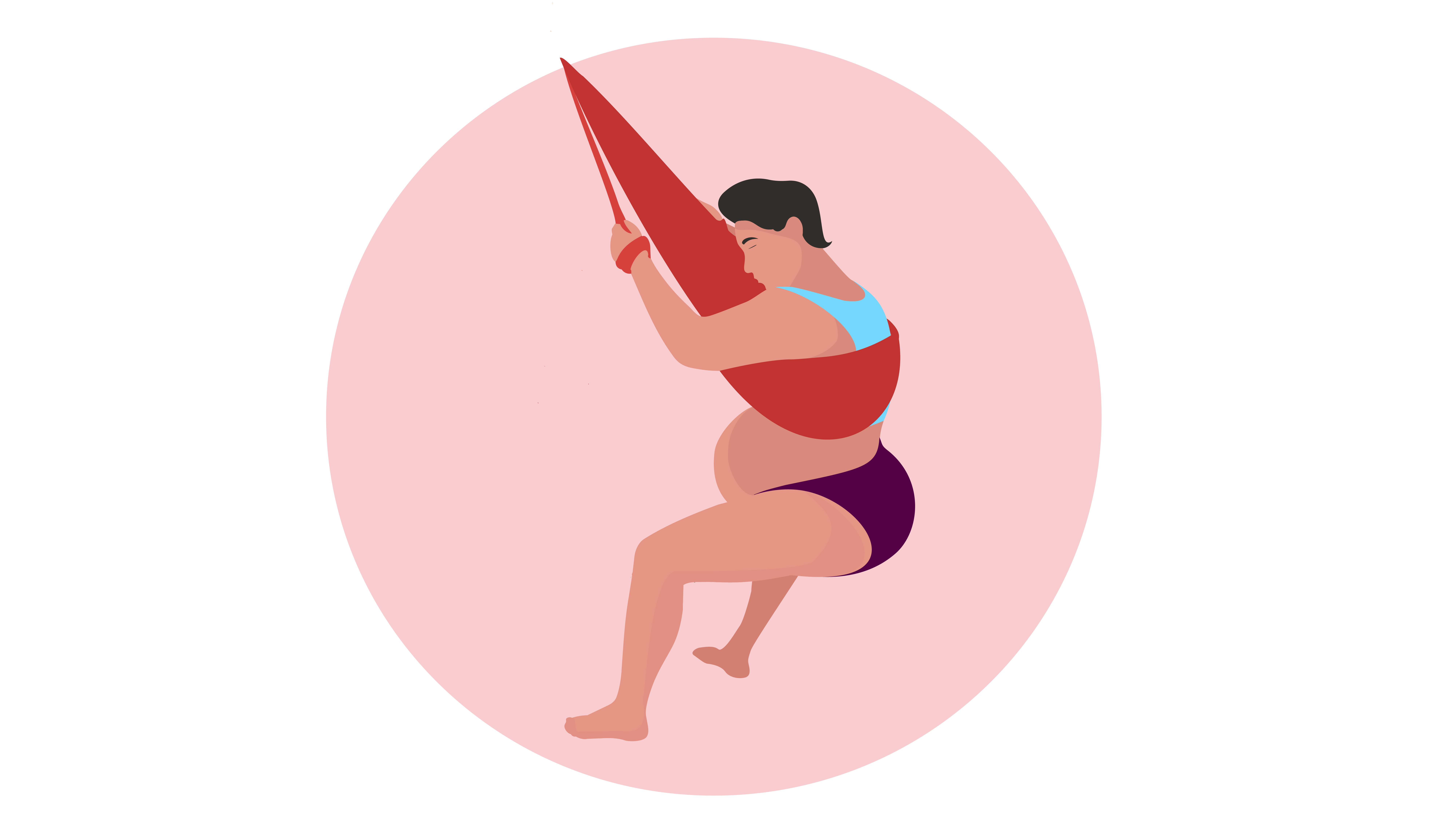
Image shows a woman or birthing person hanging and swinging from a securely fixed cloth
Other tips for the birth environment
If labouring in a birth centre or hospital the room can be adapted as the woman or pregnant person wishes.
Making the bed less obvious by moving it to the side can mean it’s easier to avoid lying down if that is desired. Some people place all their bags on it or pump it up high to lean on (Wickham, 2025).
Pillows can be brought from home to make a comfortable nest with low lighting and cushions to feel grounded. Sometimes balls, mats and bean bags are tidied away in cupboards, so ask about what resources are available (Wickham, 2025).
Most hospital labour rooms will have a shower or bath, so even if there isn’t a pool, the benefits of water are still available.
Are any positions recommended in certain situations?
When the baby is in an awkward position
Our article explains more about what positions babies might adopt in the womb.
Most babies rotate into position for birth without the need for intervention, and there is no evidence that adopting any particular position affects that (Lee et al, 2021).
There are no drawbacks to being on hands and knees or side-lying positions which the woman or birthing person might use for comfort and to ease backache (Barrowclough et al, 2022; Hunter et al, 2007).
Anecdotally, some women and birthing people find it comfortable to lie on their back if the baby is in a ‘back-to-back’ position. They should be supported to do what feels comfortable.
With pelvic girdle pain
Where the woman or pregnant person has severe pelvic pain in pregnancy it is important to ensure that all caregivers support the need to avoid moving outside comfortable limits. Read more in our article on pelvic girdle pain.
Barrowclough JA, Lin L, Kool B, Hofmeyr GJ, Crowther CA. (2022) Maternal postures for fetal malposition in labour for improving the health of mothers and their infants. Cochrane Database of Systematic Reviews, Issue 8. Art. No.: CD014615. https://doi.org/10.1002/14651858.CD014615
Binici D K L, Aktaş S. (2024) The Effect of Labor Dance in the First Stage of Labor on Labor Pain, Anxiety, Duration of Labor, and Maternal Satisfaction with Labor: A Randomized Controlled Study. J Integr Complement Med. Apr;30(4):383-393. https://doi.org/10.1089/jicm.2022.0818
Familiari A, Neri C, Passananti E, Di Marco G, Felici F, Ranieri E, Flacco ME, Lanzone A (2023) Maternal position during the second stage of labor and maternal-neonatal outcomes in nulliparous women: a retrospective cohort study, AJOG Global Reports, 3(1)100160. https://doi.org/10.1016/j.xagr.2023.100160
Gimovsky AC, Berghella V (2022) Evidence-based labor management: second stage of labor (part 4), American Journal of Obstetrics & Gynecology MFM, 4(2)100548. https://doi.org/10.1016/j.ajogmf.2021.100548
Gupta JK, Sood A, Hofmeyr GJ, Vogel JP. (2017) Position in the second stage of labour for women without epidural anaesthesia. Cochrane Database of Systematic Reviews, Issue 5. Art. No.: CD002006. https://doi.org/10.1002/14651858.CD002006.pub4
Healy M, Nyman V, Spence D, Otten RHJ, Verhoeven CJ (2020) How do midwives facilitate women to give birth during physiological second stage of labour? A systematic review. https://doi.org/10.1371/journal.pone.0226502
Hofmeyr G, Singata-Madliki M. (2020) The Second Stage of Labour. Best Practice Research Clinical Obstetrics Gynaecology. 67:53-64. https://doi.org/10.1016/j.bpobgyn.2020.03.012
Hunter S, Hofmeyr GJ, Kulier R. (2007) Hands and knees posture in late pregnancy or labour for fetal malposition (lateral or posterior). Cochrane Database Syst Rev. (4):CD001063. https://doi.org/10.1002/14651858.CD001063.pub3
Kibuka M, Price A, Onakpoya I, Tierney S, Clarke M. (2021) Evaluating the effects of maternal positions in childbirth: An overview of Cochrane Systematic Reviews. Eur J Midwifery. Dec 21;5:57. https://doi.org/10.18332/ejm/142781
Kjeldsen LL, Læssøe U, Bendix JM, Maimburg RD (2025) Maternal positions in childbirth – A cohort study of labouring women’s movements and body positions the last 24 hours before birth, Sexual & Reproductive Healthcare, 43, 101059. https://doi.org/10.1016/j.srhc.2024.101059
Lawrence A, Lewis L, Hofmeyr GJ, Styles C. (2013) Maternal positions and mobility during first stage labour. Cochrane Database of Systematic Reviews, Issue 10. Art. No.: CD003934. https://doi.org/10.1002/14651858.CD003934.pub4
Lee N, Munro V, Oliver K, Flynn J (2021) Maternal positioning with flexed thighs to correct foetal occipito-posterior position in labour: A systematic review and meta-analysis, Midwifery, 99, 103008. https://doi.org/10.1016/j.midw.2021.103008
Madorsky JG. (1995) Influence of disability on pregnancy and motherhood. West J Med. Feb;162(2):153-4. https://pmc.ncbi.nlm.nih.gov/articles/PMC1022654/ [12 May 26]
NICE (2023) Intrapartum care [NG235]. https://www.nice.org.uk/guidance/ng235 [28 Apr 26]
O’Brien M (2022) Upright and Active Birth – Active Support! https://www.all4maternity.com/upright-and-active-birth-active-support/ [28 Apr 26]
Savla R, Mullerpatan R, Agarwal B, Kuttan V, Kumar S. (2024) Influence of Physical Activity Including Squat Exposure on Trunk Muscle Strength and Labour Outcome in Pregnant Women. Int J Exerc Sci. Apr 1;17(1):504-516. https://doi.org/10.70252/VGAK1504
The Epidural and Position Trial Collaborative Group (2017) Upright versus lying down position in second stage of labour in nulliparous women with low dose epidural: BUMPES randomized controlled trial. BMJ; 359 :j4471 https://doi.org/10.1136/bmj.j4471
Topalidou A, Haworth L, Jassat R, Hawcroft-Hurst M (2025) What do we actually know about the biomechanics of pregnancy and labour? A systematic scoping review. Plos One. https://doi.org/10.1371/journal.pone.0337595
Walker KF, Kibuka M, Thornton JG, Jones NW. (2018) Maternal position in the second stage of labour for women with epidural anaesthesia. Cochrane Database of Systematic Reviews, Issue 11. Art. No.: CD008070. https://doi.org/10.1002/14651858.CD008070.pub4
Wickham S (2025) Upright positions in labour – the benefits. https://www.sarawickham.com/original-articles/upright-positions/ [28 Apr 26]
Zang Y, Lu H, Zhang H, Huang J, Zhao Y, Ren L (2021) Benefits and risks of upright positions during the second stage of labour: An overview of systematic reviews, International Journal of Nursing Studies, 114, 103812. https://doi.org/10.1016/j.ijnurstu.2020.103812
Zang Y, Lu H, Zhao Y, Huang J, Ren L, Li X. (2020) Effects of flexible sacrum positions during the second stage of labour on maternal and neonatal outcomes: A systematic review and meta-analysis. J Clin Nurs. 29:3154-3169. https://doi.org/10.1111/jocn.15376